A comprehensive investigation published in the Soil Science Society of America Journal sets a new benchmark for experimental rigor in the use of space regolith simulants. The study not only confirms the presence of persistent terrestrial life in these materials but also details the physical limitations of bulk sterilization and the profound chemical alterations caused by heat treatments.
 Figure 1. Particle size fractions of the JSC Mars-1 simulant. Credit: Wikimedia Commons (CC BY-SA 3.0).
The Rigor Behind the Discovery
The team evaluated simulants representing various suppliers and storage conditions, including LHS-1 (lunar), MGS-1 (Martian), JEZ-1 (Jezero Delta), and JSC Mars-1.
Sterilization Protocols and Volume: The study tested sterilization efficacy across four types of containers: Magenta-type boxes (Magenta Corp., 100 mL), glass beakers (500 mL), and autoclave trays or bags (5 L). Autoclave settings were 120°C at 15 PSI for 60 minutes, while dry heat was applied at 180°C for 8 hours. To assess organic load, the loss-on-ignition (LOI) technique was used at 600°C for 12 hours.
Consequences of sterilization
The sterilization of planetary regolith simulants, while necessary to remove microorganisms, can cause significant modifications to the material's physicochemical structure, directly impacting nutrient bioavailability and mineral cycling processes.
The primary ways in which sterilization alters the structure of the regolith simulant and resource availability are:
1. Changes in Mineralogy and Hydration
Heat treatment affects sensitive minerals that are fundamental to soil chemistry:
• Clay Collapse: During furnace heating (400°C), smectite-group minerals undergo structural collapse due to the loss of water between their layers. Even in an autoclave (120°C), subtle changes occur in the hydration state of these clays. Since clays are crucial for cation exchange capacity, their alteration can change how nutrients are retained and released to plants.
• Salt Dehydration: Simulants such as MGS-1 and JEZ-1 undergo a transformation from gypsum to anhydrite when heated. This change in hydration state alters mineral solubility and soil solution chemistry.
2. Metal Mobility and Oxidation
Sterilization directly interferes with the oxidation states and mobility of essential elements:
• Iron Alteration: Heat can convert nanophase iron oxides, such as ferrihydrite, into hematite. Furthermore, studies cited in the sources indicate that autoclaving alters iron mobility, which is a critical factor for root metabolism and bioleaching processes.
• Oxidation State: Chemical sterilization methods (such as the use of hydrogen peroxide) can significantly alter the material's oxidation state, changing the chemical form (and the toxicity or availability) of various nutrients.
3. Physical and Textural Modifications
• Particle Aggregation: The autoclaving process can cause the simulant particles to aggregate, altering their texture and porosity.
• Compaction: During steam treatment, the regolith can become densely compacted, which not only hinders the sterilization process itself but also alters the substrate's mechanical properties and aeration.
4. Impact on Biogeochemical Cycles (BISRU)
These physicochemical changes have a cascading effect on In-Situ Biological Resource Utilization (BISRU) processes:
• Changes in mineral and chemical properties can affect key microbial metabolic processes, such as nutrient cycling and biocementation.
• If the research objective is to test water or nutrient extraction, the additional moisture introduced by the autoclave may invalidate the results by altering the initial conditions of the simulant.
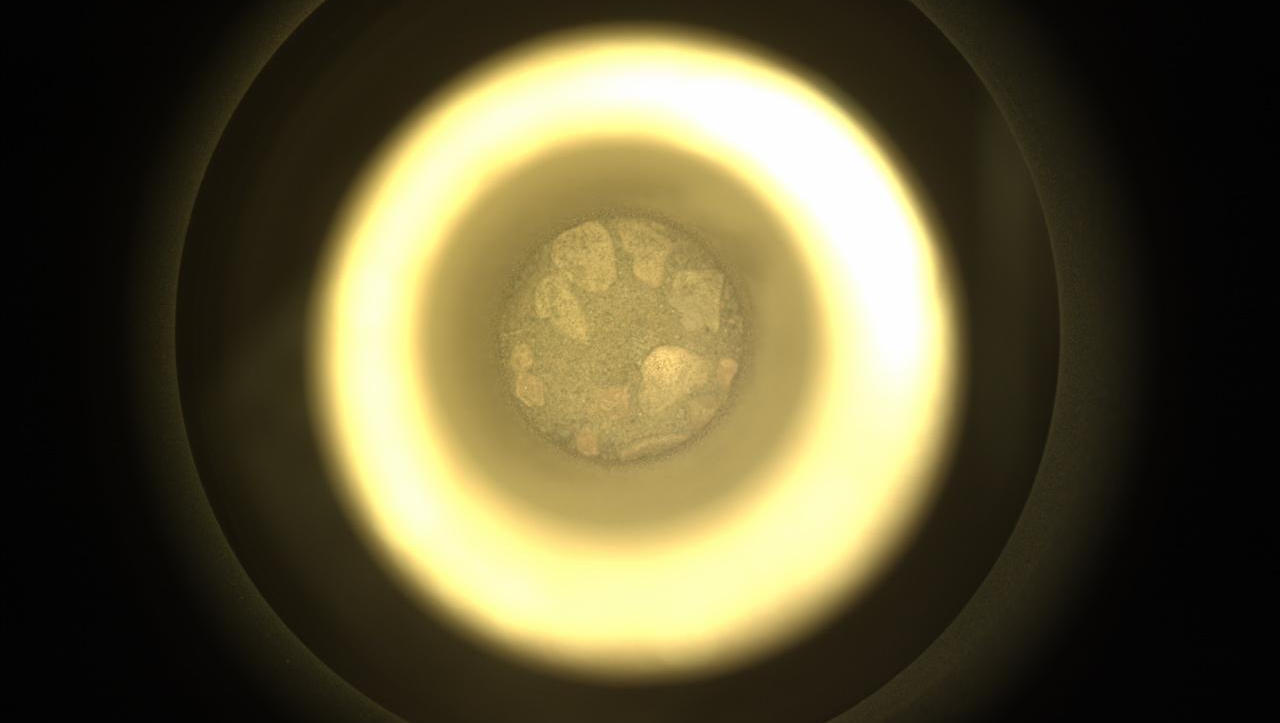
 Figure 2. Container with a sample of the JSC Mars-1A simulant, licensed under Creative Commons (CC BY-SA 3.0) by Z22 on Wikimedia Commons.
Organisms observed in the simulated regolith
Given the extremely low biomass and inhibition by salts and clays, three modifications to the Qiagen DNeasy PowerSoil Pro kit were tested for DNA extraction from the simulated regolith. The third modification to the DNA extraction protocol represents the study's most significant methodological advancement:
• Modification 3: Introduction of a concentrated phosphate buffer (P/EtOH; 1 M phosphate, 15% ethanol, pH 8) during the lysis step, followed by incubation at 80°C for 40 minutes.
Below, I detail what it does and why it is vital for microbiological verification:
This modification, adapted from previous studies on extreme soils, introduces two critical elements to the standard extraction kit (Qiagen DNeasy PowerSoil Pro):
1. Concentrated Phosphate Buffer (P/EtOH): During the lysis step (cell disruption), a solution containing 1 M phosphate and 15% ethanol at pH 8 is added.
- Function: Simulants contain clays and salts that "sequester" DNA, preventing it from being collected. Phosphate chemically occupies the binding sites on the clays, releasing the DNA into the solution.
2. Heat Treatment (80°C): The samples are incubated in a heating block for 40 minutes at 80°C.
- Function: Heat helps detach genetic material bound to minerals and facilitates the breakdown of cell walls in more resistant microorganisms—such as endospores—that might otherwise be missed during cold extractions.
 Figure 3. Samples of lunar and Martian regolith simulant. Source: Space Foundation.
Why did this technique prove important for the research?
Unlike common methods, this approach allows for a precise verification of the simulant's biological reality:
• Quantity and Quality Verification: While other methods yielded DNA quantities below the limit of detection, this protocol generated concentrations of up to 1.4 ng/µL after extraction and up to 10.9 ng/µL after PCR amplification. This is what actually makes it possible to "see" the microbial load present.
• Sequencing Feasibility: It was the only method that produced sufficient data (3.34 Gb of data and 723,000 reads) to perform high-quality genomic sequencing (N50 of 5.78 kb).
• Identification of Relevant Taxa: Thanks to this precision, researchers were able to identify specific genera such as Rhodococcus, Domibacillus, and Priestia. This makes it possible to determine whether the microorganisms present are plant pathogens or if they can aid plant growth in life-support systems.
Caveat regarding taxon identification in this study
Although the simulants did not prove to be sterile and contained cultivable bacteria and fungi, genetic sequencing indicates that many of the classified taxa may represent biological noise (contamination), reinforcing the need for even more rigorous cleaning protocols and experimental controls.
What the results reveal:
The data showed that sterilization is volume-dependent. Although 100 mL and 500 mL volumes were successfully sterilized, the 5 L samples exhibited critical failures at the center of the material, presenting the following characteristics:
• Microbial Persistence: In the center of the 5 L containers, colony-forming unit (CFU) counts remained significant, ranging from 4.5 × 10³ to 7.4 × 10⁴ in nutrient broth (NB) culture media. This demonstrates that regolith compaction impedes vapor penetration, protecting endogenous microbes.
• Mineralogical Impact: X-ray diffraction analysis showed that furnace treatment (400°C) caused the collapse of smectite and the complete transformation of gypsum into anhydrite in the Martian simulants. Even in the autoclave (120°C), subtle changes in the hydration state of the clays were detected. Figure 4. NASA/JPL COLDArm robotic arm over lunar regolith simulant, unrelated to the study discussed. Credit: NASA/JPL-Caltech.
Conclusions, implications, and recommendations for researchers
The study concludes that the use of in-situ biological resources (BISRU) requires a deep understanding of the initial substrate. The main recommendations for researchers are:
1. Abandoning the Premise of Sterility: Every simulant, even one that has just been opened, must be treated as a biologically active system capable of competing or interacting with introduced organisms.
2. Fractional Sterilization: For large-volume experiments (such as agricultural beds), the material must be sterilized in small batches (<500 mL) before being combined, ensuring the elimination of pathogens and soil-borne contaminants.
3. Control of Texture Changes: Sterilization alters not only the biology but also particle aggregation and the mobility of ions such as iron, which can impact nutrient bioavailability for plants.
4. Use of Negative Controls: Due to challenging DNA classification rates (with 23% to 100% of reads remaining unclassified in some methods), the use of rigorous negative controls is indispensable for distinguishing the true biological signal from laboratory contamination.
This work provides the necessary starting point for establishing guidelines for the handling of simulants, ensuring that future space colonies are built on solid and predictable scientific foundations.