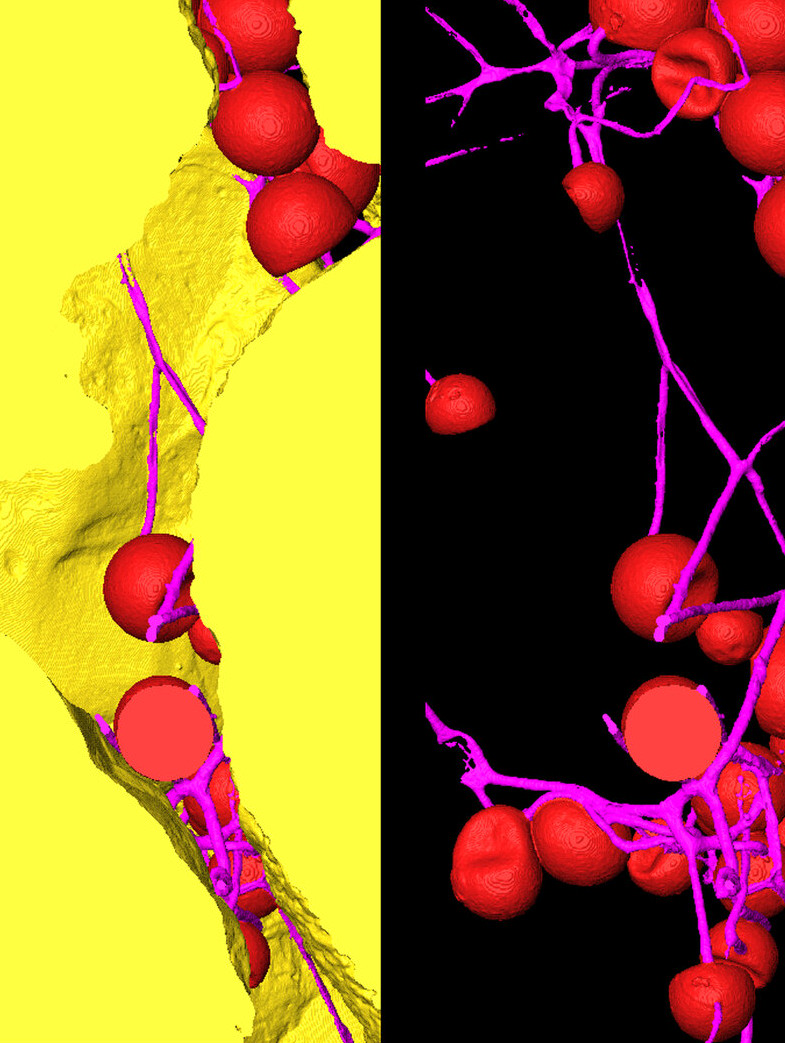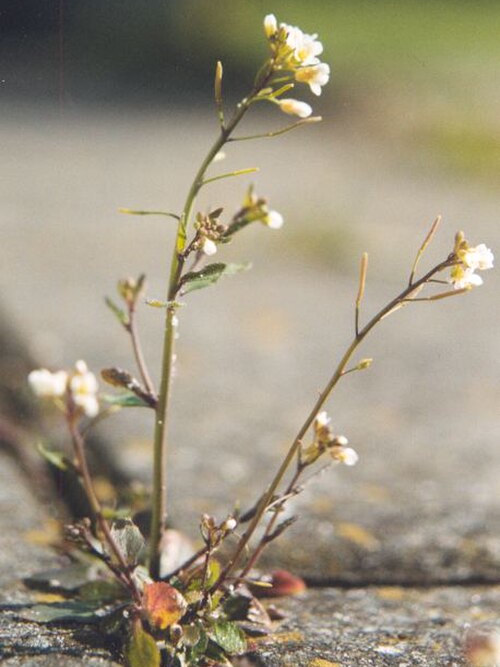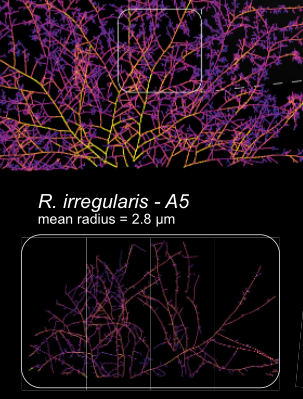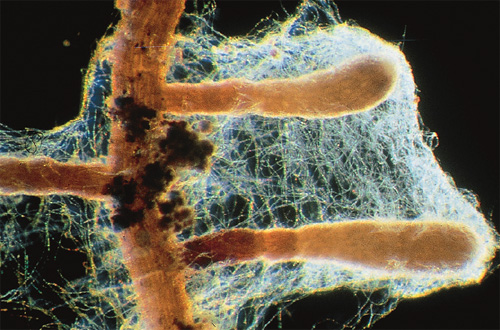
In a milestone for astrobotany, a new study published in Scientific Reports details how the collaboration between plants, fungi, and organic waste can transform hostile lunar regolith into a productive growth medium. For the first time, researchers have reported cultivating chickpeas (Cicer arietinum) through to the seed-production stage in lunar regolith simulant (LRS) using terrestrial bioremediation strategies. Figure 1. Interactions among chickpea, arbuscular mycorrhizal fungi (AMF), and vermicompost (VC) in the rhizosphere. Chickpea has a taproot that reaches depths of up to 30 cm, with lateral branches. The root system associated with AMF (left) accesses a larger volume of the growth medium, reaching nutrients and water that would otherwise be inaccessible, while simultaneously sequestering heavy metals (HM) and preventing their uptake. The root system without AMF (right) exhibits a smaller surface area, shorter roots, and fewer protective mechanisms against HM. VC introduces rhizospheric microorganisms and provides nutrients necessary for plant development.
The Lunar Regolith Challenge: Toxicity and Structure
Lunar regolith (LR) presents severe obstacles to plant physiology. Although it contains essential nutrients such as phosphorus (P), potassium (K), calcium (Ca), and magnesium (Mg), these are locked in mineral forms with low bioavailability. Furthermore, LR lacks nitrogen (N) and organic matter and contains potentially toxic elements—such as iron (Fe), aluminum (Al), and copper (Cu)—in high concentrations. Finally, it also exhibits problematic physical properties: irregular, angular, and often hydrophobic particles, resulting in low permeability and poor gas exchange.
The Research Triad: Chickpea, AMF, and Vermicompost
To overcome these barriers, the team led by Jessica Atkin employed an In-Situ Resource Utilization (ISRU) approach based on three pillars:
1. Chickpea (Cicer arietinum): Chosen for its high nutritional value (proteins and carbohydrates), low water demand, and ability to form symbioses with microorganisms.
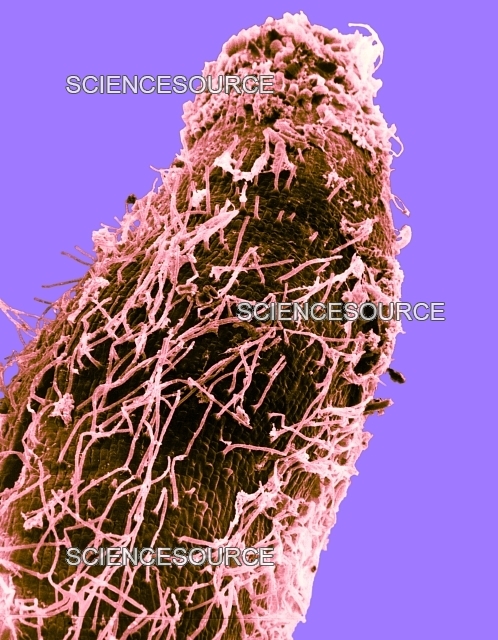
2. Arbuscular Mycorrhizal Fungi (AMF): These fungi play a role in phytoremediation by sequestering heavy metals within their hyphae and protecting roots from toxicity. They also produce glomalin, a glycoprotein that acts as a binding agent for soil aggregate formation.
3. Vermicompost (VC): Introduces active microbiota and soluble nutrients, in addition to mitigating the extremely alkaline pH of the regolith.
Methodology: Constructing a Lunar Rhizosphere
To test the feasibility of cultivation, the team employed a rigorous In-Situ Resource Utilization (ISRU) methodology:
Substrate: The high-fidelity simulant LHS-1 was used; it mimics the mineral, chemical, and particle-size properties of the lunar highlands.
Treatments: Chickpea (Desi variety 'Myles') was planted in mixtures of LRS and vermicompost (VC) at LRS proportions of 25%, 50%, 75%, and 100%. Half of the samples were inoculated with an AMF consortium (including *Rhizophagus intraradices* and *Funneliformis mosseae*).
LRS25: 25% lunar regolith and 75% vermicompost.
LRS50: 50% lunar regolith and 50% vermicompost.
LRS75: 75% lunar regolith and 25% vermicompost.
LRS100: 100% lunar regolith (without added vermicompost).
Wick Irrigation: To prevent the formation of surface crusts on the regolith—which impede water infiltration—a bottom-wicking irrigation system was adopted, delivering moisture passively and consistently via capillary action.
Data Analysis: Growth was monitored over 120 days, assessing everything from seedling establishment to dry biomass and aggregate stability using the SLAKES app, which employs image recognition to measure soil integrity.
Experimental Results and Productivity
Key findings include:
Improved Seed Production: Plants inoculated with AMF were able to produce seeds in mixtures containing up to 75% LRS. Although the total number of pods decreased as the regolith concentration increased, the weight of individual seeds remained stable, suggesting that the process was efficient once seed filling had begun.
 Figure 2. Total seed count and grain weight of chickpea in substrate controls, LRS/VC mixtures, and 100% LRS, with or without (+/−) inoculation with arbuscular mycorrhizal fungi (AMF). (a) Total pods per plant. (b) Empty pods per plant. (c) Standardized seed mass (100-seed weight). Source: ATKIN J., et al. (2026)
Survival Extension: In 100% LRS (without compost), all plants eventually died before flowering due to severe stress. However, inoculation with AMF extended plant survival by two weeks (75 days) compared to non-inoculated plants (61 days).
pH modulation: Raw LRS started with a strongly alkaline pH of 9.9. The addition of vermicompost reduced the pH to a slightly acidic range (5.9–6.4). Notably, mycorrhizae helped stabilize the pH between 6.2 and 6.6 after harvesting, maintaining nutrient bioavailability and metal solubility at controllable levels.
 Figure 3. pH values of the growth substrate and lunar regolith simulant mixtures at the start of the study (t0) and after harvest, without (−) and with (+) arbuscular mycorrhizal fungi (AMF) inoculation. Source: ATKIN J., et al. (2026)
Improvement of Substrate Structure
One of the most significant advances in the study of plant growth in extraterrestrial soils was the demonstration that AMF-plant symbiosis improved the structural integrity of the simulant. Using the SLAKES test (which measures aggregate stability via image recognition), researchers confirmed that AMF treatments exhibited significantly higher aggregate stability. Fungal hyphae "entangled" the regolith particles, creating porosity and mitigating risks associated with fine, angular particles.
 Figure 4. Aggregate stability of chickpea grown in a control substrate, LRS/VC mixtures, or 100% LRS, with or without arbuscular mycorrhizal fungi (AMF) inoculation, determined by the SLAKES method. AMF inoculation significantly increased aggregate stability across all substrates, whereas non-inoculated treatments—particularly LRS100—exhibited reduced stability. Bars represent the mean ± standard error, with individual replicates overlaid. Letters indicate groups that do not differ significantly (ANOVA, p < 0.05). Source: ATKIN J., et al. (2026)
Plant Measurement
 Figure 5. (A) Plant height. Control plants, with or without arbuscular mycorrhizal fungi (AMF) inoculation (+/−, respectively), were taller than most LRS treatments; height was significantly reduced in the LRS75 and LRS100 treatments without AMF. (B) Root biomass was higher in the controls, whereas LRS treatments—especially LRS100 without AMF—showed reduced root growth. (C) Shoot biomass followed a similar trend: controls produced the highest shoot mass, and the LRS100 treatment without AMF produced the lowest. (D) Ratios were close to 1 in most treatments, except for LRS100 without AMF, which showed a significantly high root:shoot allocation. Bars represent the mean ± standard error (n = 8). Different letters indicate significant differences (ANOVA, p < 0.05). Source: ATKIN J., et al. (2026)
The study's biometric data reveal that chickpea growth was strongly influenced by substrate composition, with control plants exhibiting height, root mass, and shoot mass consistently superior to those of all regolith treatments.
However, symbiosis with AMF mitigated some of these limitations; inoculated substrates showed significantly higher root dry mass, and the LRS50+ and LRS75+ mixtures exhibited shoot biomass superior to that of the untreated versions.
Regarding resource partitioning, most treatments maintained a root-to-shoot ratio close to 1, demonstrating a balanced allocation of biomass. The only significant exception was the LRS100 treatment (pure regolith without fungi), which exhibited a drastically high ratio, indicating a severe stress response in which the plant prioritized root investment in an attempt to acquire nutrients from a limiting medium.
Conclusions: A Leap Toward Space Sustainability
The study concludes that terrestrial soil regeneration strategies are applicable and effective in extraterrestrial environments. The main findings indicate:
Unprecedented Seed Production: Inoculation with AMF enabled flowering and seed production in mixtures containing up to 75% regolith. Without mycorrhizae, no plants grown in regolith produced seeds.
Resilience Under Extreme Conditions: Surprisingly, mycorrhizal colonization occurred even in 100% LRS. Although these plants died before flowering due to severe stress, AMF extended their lifespan by 14 days compared to non-inoculated plants.
Production Quality: Although the number of seeds decreased as the LRS concentration increased, individual seed weight remained stable, suggesting that the seed-filling process was preserved.
Structural Improvement: The use of AMF resulted in significantly higher aggregate stability, proving that biology can mitigate the physical risks posed by the Moon's fine, angular particles.
Although the plants still show signs of stress (such as chlorosis and stunted growth), researchers suggest that cultivating multiple generations in the same conditioned substrate could progressively improve regolith fertility for future lunar colonies.
Implications for Astrobotany and Earth
In the field of astrobotany, the introduction of arbuscular mycorrhizal fungi (AMF) into lunar regolith simulant (LRS) was not merely a supplement but the decisive factor for the reproductive viability of chickpeas. While vermicompost provided the initial nutritional and microbial foundation, the mycorrhizae acted as biological engineers, modifying the physicochemical properties of the substrate in ways the plants alone could not achieve.